Introduction
In this age of hyper-connectivity and high-end equipment, true freedom lies not in what you buy, but in what you can do. Bushcraft is neither a nostalgic pastime nor an extreme survival activity; it is the art of self-reliance. It is the difference between being a guest in nature and being part of it.
What is bushcraft?
The word is derived from ‘Bush’ (forest/woodland) and ‘Craft’ (trade/skill). Defining it simply as ‘survival’ is a common mistake. Whilst survival is a reactive response to an emergency, bushcraft is a proactive and technical practice.
It is the body of knowledge that enables us to thrive in the natural environment by making use of the resources it provides, whilst minimising our dependence on external and technological factors.
The term originated in the 19th century in the British colonies, when it was used to describe the skills needed to survive and travel in the Australian Outback or the African savannah, places where Western infrastructure was non-existent.
The Fundamentals of the Discipline
To understand bushcraft, we need to break it down into four fundamental skills:
- Understanding the Environment: Applied botany, water collection and reading the landscape. Nature ceases to be an obstacle and becomes an ally.
- Natural Navigation: It is the art of ‘invisible navigation’. Going beyond GPS or a compass, it involves interpreting celestial guides (stars, the sun and the phases of the moon) and biotic signs, such as vegetation growth patterns and prevailing winds, to maintain a constant awareness of one’s surroundings.
- Hydration and Management: Water is the most important resource. Mastering this field involves identifying water sources using bioindicator plants and applying the ‘alchemy’ of filtration: from boiling to constructing layered filters (sand, gravel and charcoal) or collecting water through leaf transpiration in arid environments.
-
- Ethical Livelihood (Botany and Foraging): Accurate taxonomic identification enables calories to be sustainably sourced from the environment. Bushcraft involves understanding seasonal cycles in order to forage for plants and fruits, or to obtain protein through passive hunting or fishing techniques, always in accordance with an ethos of minimal impact and maximum utilisation (smoking and drying).
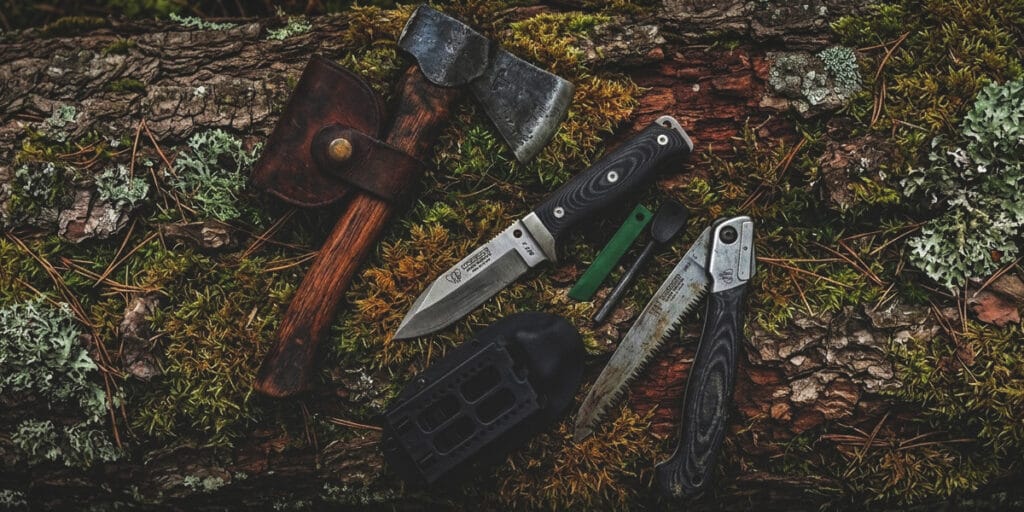
- Handling cutting tools: The safe and efficient use of a knife, an axe and a saw. These are the basic tools that enable us to transform raw materials into solutions.
- The Essential Trio: The essential bushcraft kit consists of a fixed-blade (full-tang) knife, a small axe and a folding saw. This set of steel tools enables you to work with raw timber to create everything from precision tools to complex shelters.
- Technique and Efficiency: Professional handling is not based on strength, but on biomechanics. The right technique maximises precision in woodworking and minimises physical exertion, allowing for a fluid interaction with the environment.
- Maintenance and Responsibility: In remote areas, a blunt tool is a dangerous tool. The trade requires knowing how to restore edges in the field using a leather strop or natural stones, bearing in mind that safety is an essential discipline for preventing serious accidents.
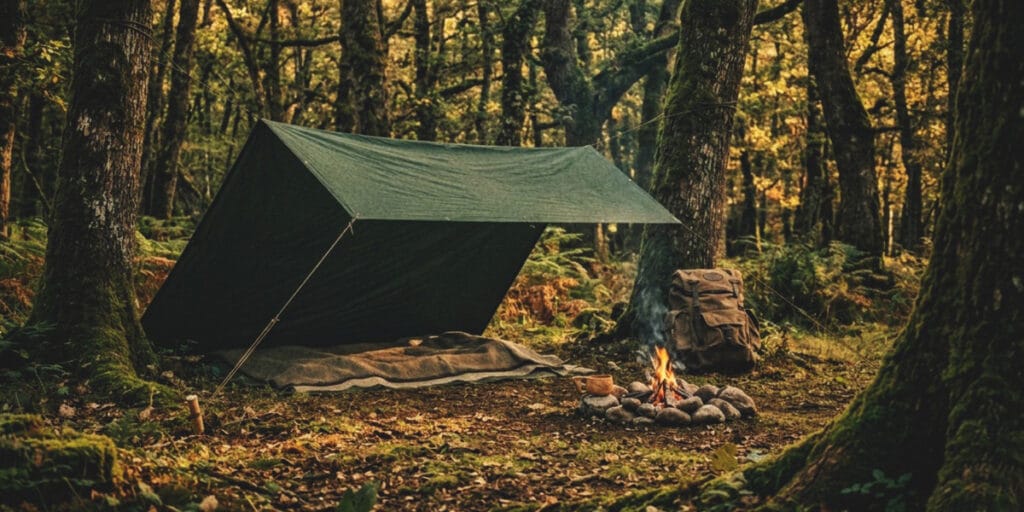
- Shelter and Comfort: The ability to design and construct shelters that ensure rest and thermal safety, using both natural materials and basic equipment (tarpaulins, ropes).
- Insulation Engineering: Shelter is the first line of defence against hypothermia. The aim is to maximise protection whilst minimising energy expenditure, using structures such as a lean-to or a debris hut. It is vital to master the techniques of insulating against the ground and retaining body heat using natural materials (leaf litter, moss, earth).
- Rope-making and Knots: The ability to tie knots is the backbone of any structure. Technical expertise centres on essential knots (guide knots, bowline knots, tension knots) and the ability to create functional rope from natural fibres, such as conifer roots or inner bark.
- Reading of the Terrain: Location is critical to safety. It involves identifying hidden risks such as flood-prone areas, wind corridors or the dangerous ‘widowmakers’ (dead branches at risk of falling).
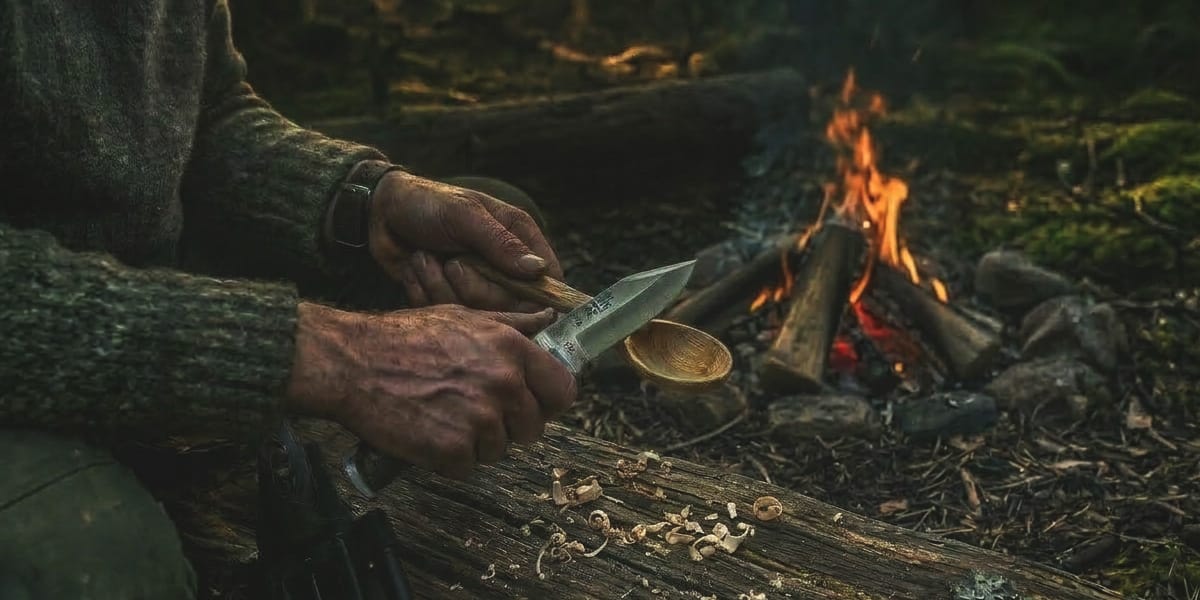
- Cutting and Tooling: The use of techniques such as spoon carving and the making of containers helps to improve the quality of life. Working with green or dry wood requires an understanding of the grain and the mechanical properties of each tree species.
- Rustic Furniture: Building raised beds, tables or benches not only improves ergonomics at the campsite, but also provides a deep sense of psychological fulfilment derived from creative self-sufficiency.
- Fire management: Not just lighting a fire, but understanding thermodynamics, different types of wood, natural tinder and how to keep a fire going in adverse weather conditions.
- Thermal Sovereignty: A skilled fire-starter ensures success even in adverse conditions (rain, wind or extreme damp). This requires a thorough knowledge of natural tinder — from polypore fungi and resinous bark to plant fluff — and the strategic use of different types of wood to maintain a long-lasting ember.
- Ignition Techniques: The subject ranges from modern, highly reliable methods, such as ferrocerium, to traditional techniques such as flint and steel or the bow drill. It is not about making fire, but about understanding the physical process behind each spark.
- Fire as a Tool: In professional bushcraft, fire is a key tool for crafting: it is used to harden wooden points, to make containers by burning out the inside, and, of course, as the most reliable method of purifying water.
Bushcraft vs. Survival: The Art of Enduring
Although they are often confused, the line that separates the two disciplines is their purpose. Survival is reactive; it is a race against time and the environment to overcome a crisis and be rescued. It is, in essence, the urgency to get home.
Bushcraft, by contrast, is a proactive choice. Its aim is not rescue, but to stay. Whilst survival is about enduring discomfort, bushcraft is about mastering the skills to feel at home in the wild. It is not about using up every resource just to survive a single night, but about understanding the environment in order to thrive within it indefinitely. It is the difference between being a castaway and being a resident.
Ethics and Connection to the Earth
This profession carries with it an inescapable responsibility: living in harmony with the ecosystem. Guided by the ‘Leave No Trace’ principle, those who practise it do not view nature as a storehouse of resources, but as a living organism of which they are a part.
- Responsible Use: Priority is given to deadwood and scrupulous respect for biodiversity.
- Zero Impact: When we leave, there should be no trace of our stay, and we should leave the place in the same condition as we found it, or even better.
Why is it essential for the modern explorer?
Incorporating bushcraft into our expeditions (whether by 4×4, motorbike or on foot) gives us something that no electronic device can guarantee: technical and psychological self-reliance. This discipline, which arose from the need to travel through wild territories lacking in infrastructure, remains today the ultimate safety net for the adventurer. Knowing that you can keep warm, make a tool or improvise a shelter allows you to explore with unshakeable confidence, turning the environment into your greatest ally.
Bushcraft is, ultimately, the lifeline of exploration.